

Dear reader,
Fun fact: My grandfather was an early member of the CDU after World War II and worked as a state secretary under Chancellor Konrad Adenauer. But he got so burned out by the job that he ended up dropping out of politics and living on a cattle farm in Ireland.
The CDU he helped build was the absolutely dominant force in post-war West Germany.
Following the disaster of the Nazis, the CDU presided over the Wirtschaftswunder and regained the trust of western allies.
quick ad break
Finding a flat in Berlin is a full time job - everyone knows that.
“With Get The Flat, I had a minimum of 10 applications a day. After barely two months, I got my dream apartment!”
Yet since the 1957 Bundestag election, when the CDU won a whopping 50.2% of the vote, it’s been a slow downhill slide. The latest poll has the party at a feeble 22.5%, far behind their extreme rightwing competition. In Sachsen-Anhalt, they're about to suffer a humiliating defeat at the hands of the AfD.
Through ups and downs, this Volkspartei was, as different times, a big enough tent to include businesspeople, people who cared about workers’ rights, people who took environmental issues seriously, people who supported refugees, people who lobbied for pensioners, even actual Christians, just as the name Christian Democratic Union would suggest.
The CDU has produced three larger-than-life chancellors:
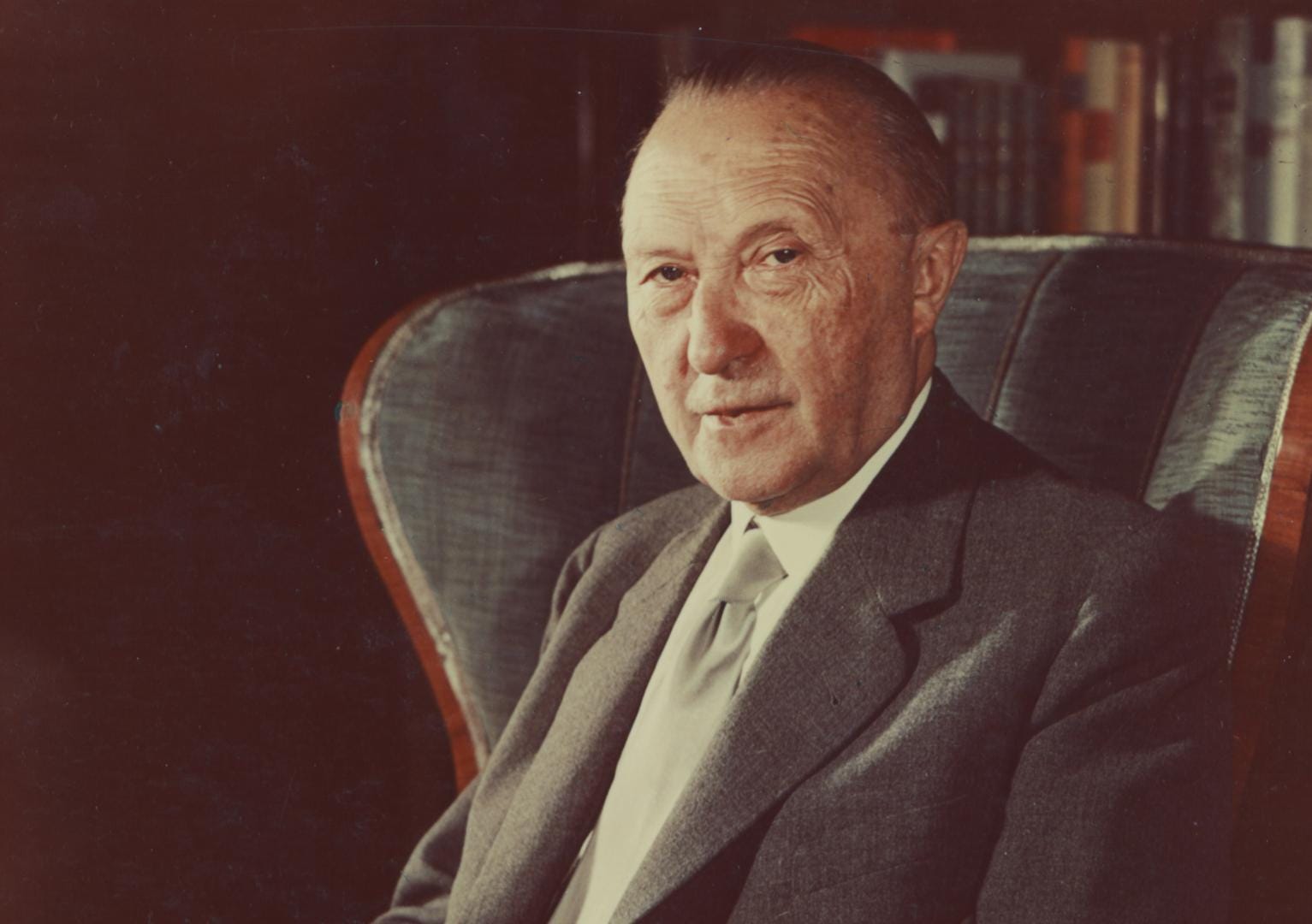
Konrad Adenauer — who rebuilt West Germany after the apocalyptic end of the Third Reich.
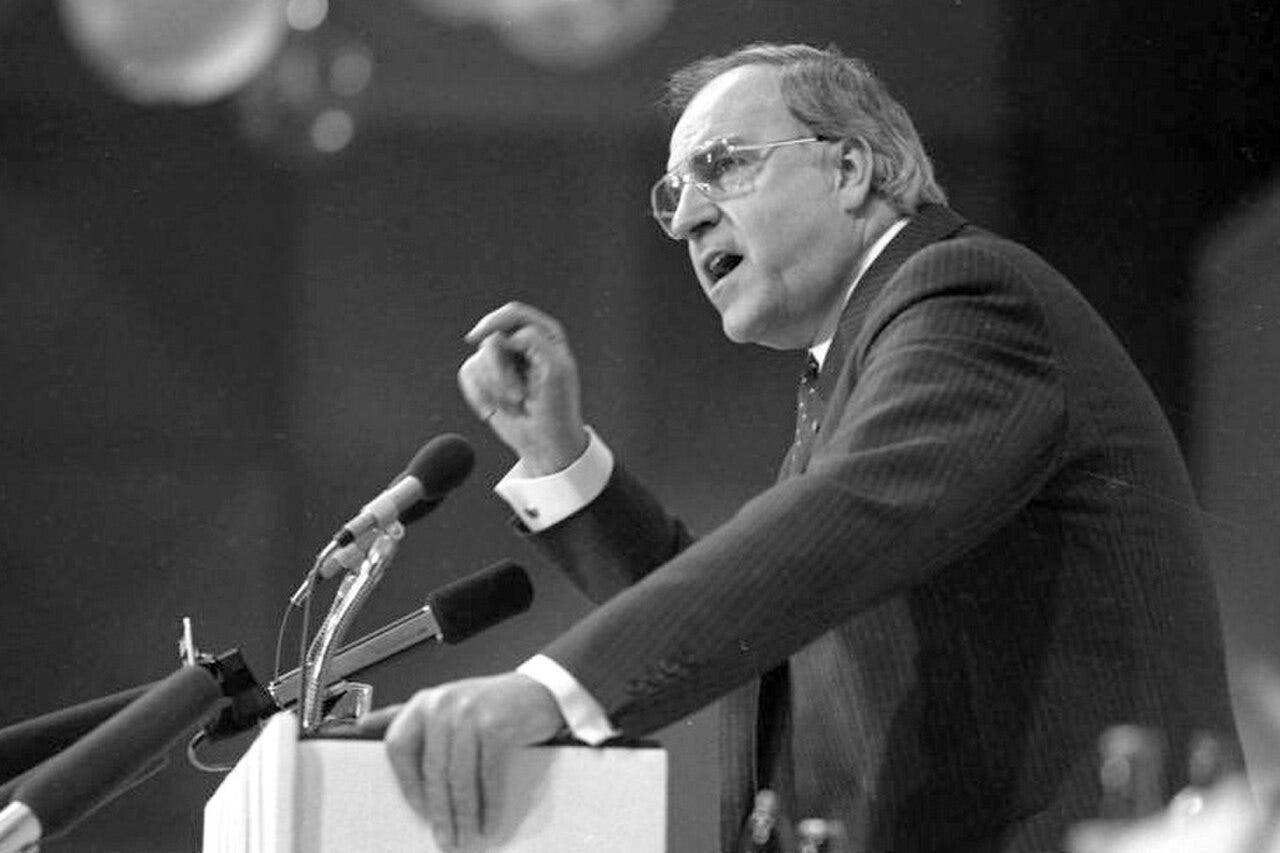
Helmut Kohl — a literal collossus who powered German unification and European integration.
Angela Merkel — the first female chancellor, stayed cool from crisis to crisis, phased out nuclear power, oversaw legalisation of same-sex marriage, and opened the borders to refugees in 2013 (quite an achievement for a party once known for occasional racist outbursts, like “Kinder statt Inder”)
Over the decades, the CDU managed to fend off attacks from further to the right. Who remembers the NPD, the DVU or Die Republikaner? All failed far-right parties that more or less shrivelled up.
Things began to wobble in Merkel’s final years. The AfD capitalised on anxiety surrounding immigration, the pandemic, and the post-pandemic economic stagnation.
In summer 2026, with Friedrich Merz perceived as unlikeable and ineffective, the AfD is eating the CDU’s lunch.
A painful moment was when the CDU’s parliamentary leader Jens Spahn was forced to resign last month after he and his husband announced a child born to a surrogate mother in the US. Only months before Spahn, who is supposed to represent the post-Merkel return to conservative values, had doubled down on his supposed opposition to surrogacy.
Meanwhile, the AfD claims to be “Germany but normal” and promises a return to the past — something like the old CDU-dominated West Germany. They yearn for the time before the 1968 student revolution, before the Greens, before immigration. A time when “bio-Germans” had plenty of kids.
Of course, that time isn’t coming back. Globalisation isn’t going away. Immigration isn’t going away. LGBTQ rights aren’t going away. Women having careers isn’t going away. Climate change isn’t going away.
At least the CDU doesn't deny these facts…
But Friedrich Merz is not a steady hand. He's no Merkel, Kohl or Adenauer. He’s prone to slips of the tongue. He’s a bad negotiator. He’s an even worse communicator. His ratings are in the basement.
Following the progressive but unstable “traffic light” coalition of Olaf Scholz, Merz and the CDU have failed to steady the ship. The economy is stubbornly refusing to grow. But that’s the whole point of the CDU. They're supposed to be the boring, no-experiments party that could always be relied upon to get Germany back on course, at least economically.
Germany needs experiments. It needs change. It needs leadership with a vision. In today's CDU, it gets crap communication, poor internal discipline and wobbly leadership. The reforms of the Merz government are lacklustre at best. A great irony of German politics is that the only chancellor to ever succeed with a sweeping reform programme is Gerhard Schröder of the centre-left SPD, who 20 years ago, for better or for worse, implemented quite radical labour market reforms 20 years that kept the economy ticking for another decade under Angela Merkel.
Under Merz, Germany’s economy remains in a slump. Almost everything the state touches feels stuck and stagnant, from Deutsche Bahn to old-fashioned schools to crumbling infrastructure to the red tape we face every day. A growing share of people is just pissed off and expressing their rebellion by supporting the “alternative”. And despite his nasty little flirt with the AfD before officially taking office in 2025, Merz would not dare switching to a coalition with the extremists.
But neither Merz nor the CDU seem to have what it takes to steer the German tanker around with a new vision of a modern, thriving country that embraces change, innovation and technology without abandoning the social market economy.
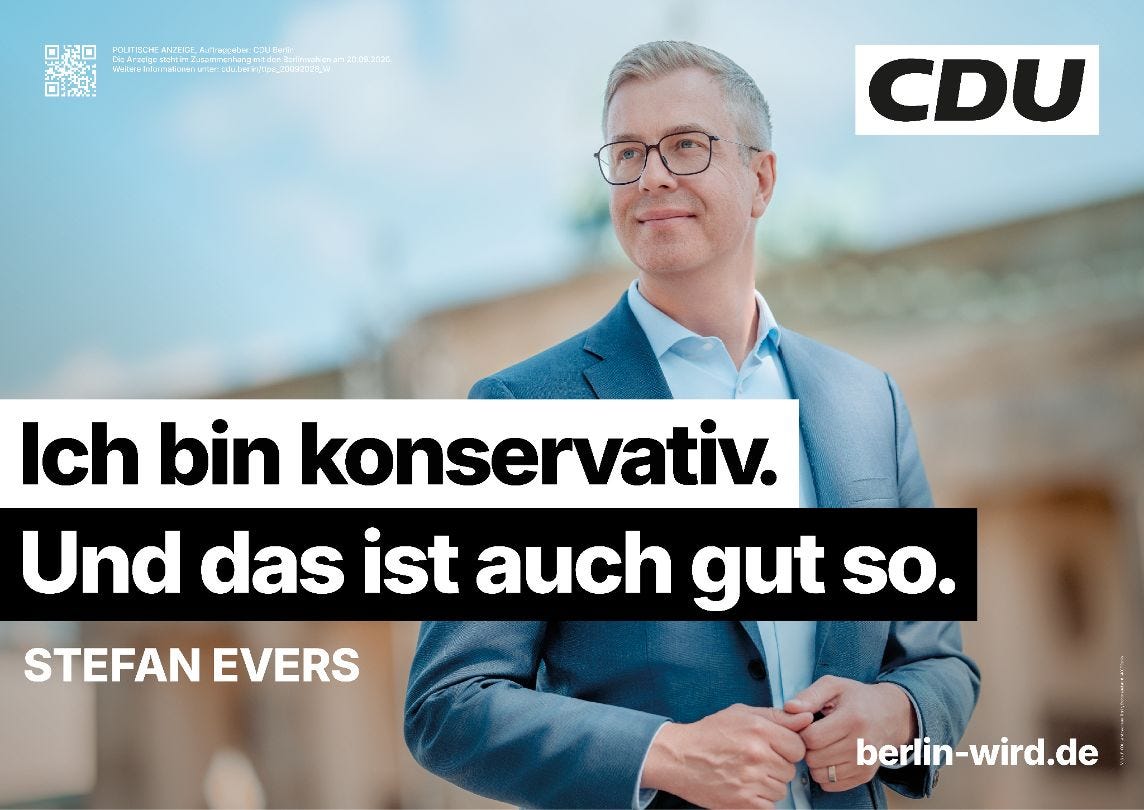
Instead, we have CDU/CSU politicians like Steffen Evers trying to copy a new conservatism that is allegedly driving people to the arms of the AfD. Like the reactionary and purely symbollic decision by Bundestag president Julia Glöckner (CDU) ban Pride flags from the institution.
Personally, I don’t think it’s conservatism that makes disillusioned voters choose the AfD. I think they're angry and want to cause maximum disruption.
By definition the CDU = the status quo, the thing people are angry about.
The foundation of life are getting shakier for more and more people in Germany. And the CDU hasn’t come up with the toolkit to mend it.
A journalist friend of mine put it this way: “The CDU isn’t going to make the reforms Germany really needs because their voters don’t want them.” By that he meant old people who don't want their pensions cut or capped.
Here’s the share of votes by age group in the 2025 election. The CDU (black) is ageing rapidly.

In short, boomers who are still relatively content are keeping the CDU alive. But for how long?
Thanks for reading.
Maurice
check out our sponsor!
Waiting on your residence permit or citizenship application?
You don’t have to. Get a free case assessment and find out what your options are.
What else happened this week?
Stash of Russian guns found in forest
Germany’s firewall was meant to hold the far right at bay. It may have done the reverse
Germany’s demographic disaster: The AfD is fanning fears of depopulation
💰 Money-Saving Tip of the Week from Smart Living in Germany
Most shops won’t let you use two promo codes on one order, but that doesn’t stop you from stacking savings on the same purchase. The trick is to combine different types of discounts: a platform promo code, a sale, and cashback can often apply to the same order.
Food delivery is the clearest example. Restaurants on Lieferando, Wolt and Uber Eats run their own offers, like 2-for-1 mains or 30% off selected dishes, while the platform emails out personal promo codes separately. Use both and a €40 order can end up under €10. The same logic works for online shopping: take the welcome discount for signing up to a store’s newsletter, wait for a sale, and use cashback extensions like Shoop, iGraal or Payback at checkout. For more ways to save money on your everyday shopping, subscribe to the Smart Living in Germany newsletter.
My other newsletters:
Friends: