#30: Notes on German bureaucracy
It's worse than you think...
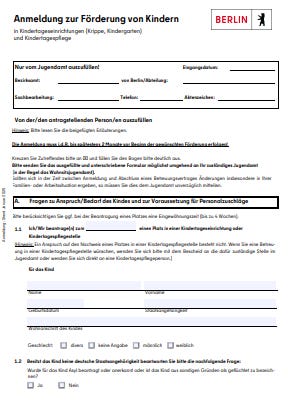
A couple of years ago, I urgently needed a Kitagutschein - a “daycare voucher” for my kids’ new kindergarten. I had emailed the Kitagutscheinstelle but hadn’t heard back.
So I called them.
They said I could come by the next day.
I showed up on time. My case worker found my email in her system, then disappeared into a back room. She returned five minutes later with a paper folder containtng 40-50 A4 sheets.
They had printed out the attachments of my email. Scans of our passports, birth certificates (of the parents and the children), proof of registration and several other documents.
She thumbed through the stack of paper, looked me in the eye and muttered, “Bureaucracy. Bad isn’t it?”
What she was really saying? Did she unironically mean, “This bureaucracy is really bad” or was it sarcastic comment on my obvious impatience with the whole procedure. Or a little of both?
About 15 minutes later, we had our printed out Kitagutscheine.
The encounter says a lot about the state of bureaucracy in Germany.
The case worker told me she needed our passports and registration because they didn’t have access to the central registry because of some IT issues.
If you’ve lived in Germany for any time at all, you know that filling out the same information every time you apply for something is standard.
Refugees arriving from war-torn Ukraine are shocked by all the paper forms you have to fill out here. Their official stuff is kept in one handy app.
In Germany, they’re still filing away printed emails.
Considering the outdated tools at her disposal, the case worker nonetheless processed our application quite efficiently and quickly. She was even kind of friendly.
But the very fact that I had to go somewhere called the Kitagutscheinstelle seems hopelessly antiquated. And why did the voucher need to be approved, anyway? All kids have a right to a spot in a kindergarten in Berlin. Why not just automate the whole thing and dump a voucher in an e-government platform as soon as the child is born?
I almost forgot, we don’t have a unified e-government platform….that was in Denmark, where we lived for two years during Covid. They’ve had these nice things for, what, 15 years?
Back to Germany, the third largest economy in the world. The birthplace of Max Weber, the legendary sociologist who called Bürokratie (“rule of the desk”) the most efficient form of administration.
“The great virtue of bureaucracy - indeed, perhaps its defining characteristic - is that it is an institutional method for applying general rules to specific cases, thereby making the actions of government fair and predictable.”
- Max Weber
I’m not so sure Weber would be that impressed by today’s Germany, where slow or overly complicated or outdated or poorly conceived state structures and rules constantly irritate and hinder citizens and organisations — with consequences ranging from the relatively harmless to existential.
Some examples:
In Frankfurt am Main, the organisers of a popular short film festival (Shorts at Midnight) threw in the towel in 2024, citing bureaucracy. The festival launched in Hofheim in 2003, was consistently sold out, required a bigger location but didn’t survive the move from Hofheim to nearby Frankfurt, which required them to complete a 70-page form on their security concept. “I just didn’t have the strength for that,” said co-organiser Gudrun Winter.
More serious:
Following the Russian invasion of Ukraine, Germany began to explore ways to grow its military. Someone in the Defence Ministry had the idea of contacting the country’s one million trained reservists to ask if they were interested in rejoining the Bundeswehr. About 93,000 of them were ex-soldiers who had been deployed in Afghanistan.
The problem was, they couldn’t find them.
Reservists aren’t required to tell the army if they change address — and the Bundeswehr is verboten from asking registry offices for ex-soldiers’ addresses. The Defense Ministry told the Financial Times that “good communication with former soldiers is important but so is data privacy.”
Then there’s the internet. If you’ve ever wondered why internet is still slow in some German cities:
Every time Deutsche Telekom wants to lay fibre optic cables in a street, they require the permission of the local power utility, the electricity network operator, the historical protection authorities, the nature conservation office, the road and civil engineering department, and the road closure commission. Is it any wonder that only 37% of German households had broadband access by 2025 (in Spain it was 95%).

A totally different field of bureaucracy involves the state’s suspicion towards freelancers and the self-employed. Unlike employees, freelancers aren’t required to make pension contributions so the state prefers people to have employment status.
About 23,000 times per year, the state pension office (Rentenversicherung) performs a Statusfestellungsverfahren, a procedure to determine of whether someone is a “fake freelancer”, i.e. working at a company but not contributing to the state pension scheme. Turns out that in 15,000 of the cases checked each year, the freelancers really are proper freelancers.
The procedure can take months or years — and it’s nervewracking for the freelancers while they wait. If found “guilty” of fake freelancing, the individual and employer could owe thousands of euros in retroactive pension contributions — which will probably lead to the freelancer going out of business and going on welfare.
Then’s there’s the housing crisis. Rules on protecting animals make sense in a densely populated country like Germany — but sometimes have absurd and costly consequences. In Hamburg, the discovery in 1996 of two corn crakes, a rare bird species, hampered a plan to build 3,000 apartments for 10,000 people. It took until 2004 to build the project, but it ended up being a third of the original size. More recently, a Berlin developer complained that the legally required relocation of an ant colony led to months of delay of an important housing project. Why? The developer had a plan to move the ants to a new habitat but it’s forbidden to move ant colonies in autumn or winter because they could have trouble getting used to their new home in cold weather.
I could go on and on.
It’s no surprise that 84% of Germans think government paperwork is “incomprehensible”.
In another survey, 66% said Merz’s government had done nothing to reduce bureaucracy.
And we know which far-right party particularly angry people often vote for….
Why is Germany like this? It’s a complicated book-length topic, but a handful of reasons stand out:
Complex structures. Local, state, federal and EU levels all have different regulations, rules, competencies and responsibilities. Sometimes all four levels are involved in a bureaucratic procedure, making it SLOW.
German thoroughness. State administration in this country has a reputation for being impartial, precise and… thorough — in the spirit of Max Weber. Laws cover every edge case, outline countless exceptions. And when it comes to bureaucratic decision-making, accuracy, fairness and thoroughness trump speed.
Data protection. Germany’s love of Datenschutz — which goes well beyond EU rules — is a fundamental stumbling block to bureaucratic efficiency. Germans somehow still believe that forbidding different departments from communicating from each other will prevent atrocities and human rights abuses such as those that occured during the Third Reich or East Germany.
“Germany is like the giant Gulliver who lies chained to the floor. We’ve chained ourselves.”
- Klaus Effing, from Kommunale Gemeinschaftsstelle für Verwaltungsmanagement, an organisation that helps local authorities cope with their administrative duties
Several of the stories above come from Patrick Bernau’s book “Bürokratische Republik Deutschland”. After reading it, I understood why politicians have such a hard time actually reducing bureaucracy. There are so many rules, and they’re so complicated, that getting rid of them itself is complicated.
The hope is, of course, that all this complexity can be made more user-friendly through digitalisation. The relative popularity of the Elster tax software (even available in English) gives some cause for hope. Though essentially an online version of a bewildering paper form, around 30 million people use it yearly. And yet the problems are often hidden. For example, when people move to a different Bundesland, the Finanzamt of the old Bundesland prints out the taxpayers file, sends it to the new Bundesland’s tax office, where people type everything in by hand. True story.
Like every chancellor before him, Merz is promising to roll back bureaucracy but hasn't revealed many details. Speaking at an association of startups, he said: “Germany just has to become faster, simpler and digital. And all that should have happened yesterday.”
I'll believe it when I see it. After all, simplification is complicated.
At least they've set up a Ministry for Digitalisation and Government Modernisation. And this week, the cabinet approved the EUDI Wallet (European Digital Identity Wallet), an app that will allow citizens to store and use official identification documents and credentials across all EU member states. EUDI — it needs a sexier name — will make it easier to apply for state services, open a bank account, digitally sign contracts etc.
Already now, online identification is possible with the AusweisApp. It’s a pain in the butt to set up, but once you have, it’s smooth. I use it to log in to Elster and recently I updated my organ donation preferences in a matter of minutes.
By the way, Berlin now let’s you apply for the Kitagutschein online.
These baby steps give me hope.
Thanks for reading!
Maurice
What else happened this week?
🚀 Germany stakes claim in new space race
👨✈️ I watched a pilot refuse a deportation…
⚽ Manuel Neuer returns to German team for World Cup
📺 German nudism on the way out?
📺 The Big Lebowski (free on Arte, in original version)
💰 Money-Saving Tip of the Week from Smart Living in Germany
The deadline to file your 2025 tax return is July 31 if you’re required to file and not using a tax advisor. Even if you’re not required, you can still file voluntarily for up to four years back, and it’s often worth it. Beyond the €1,230 flat rate deduction every employee gets automatically, there’s a long list of things you can claim: commuting costs, work-from-home expenses or €6/day flat rate, cleaners, gardeners and babysitters, donations to charities, insurance premiums and more.
With software like Wundertax or Taxfix, a return usually takes 20-30 minutes. For a closer look at what you can deduct, Smart Living in Germany has two in-depth guides to tax deductions: part 1 and part 2.
My other newsletters:
Friends:


